

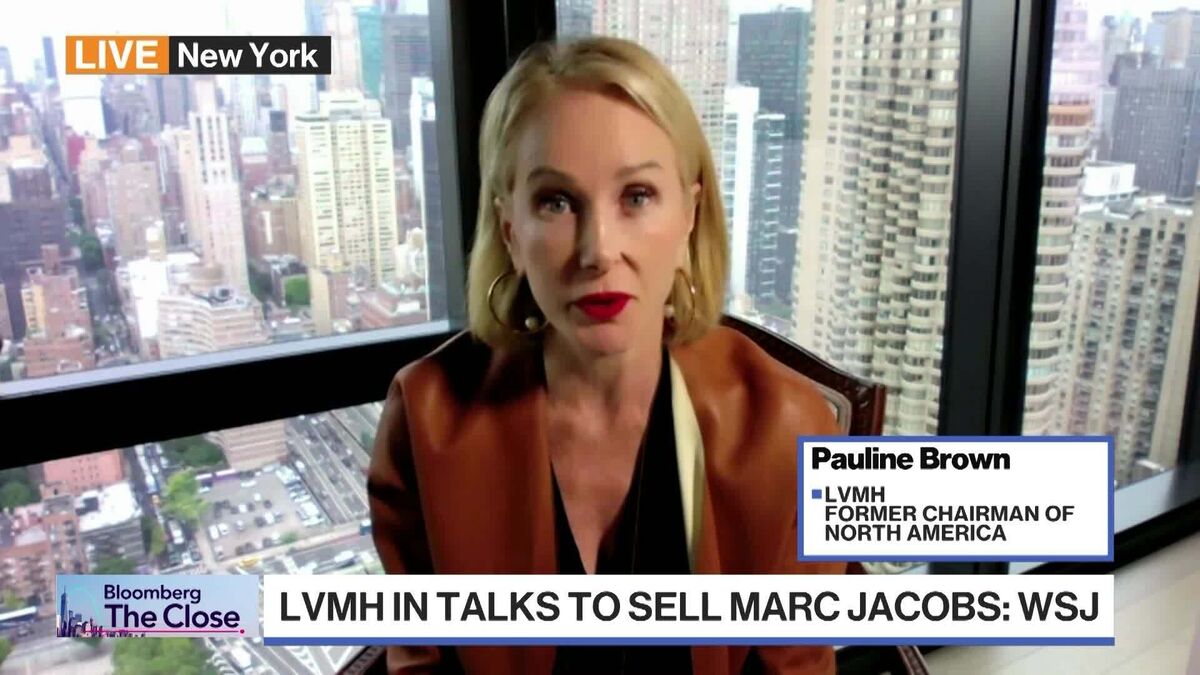
00:00Just to get your quick comment here, first on LVMH in talks to sell, Marc Jacobs isn’t doing this because or holding talks to do this because it has to or because it sees an opportunity? Well, it definitely doesn’t have to As tough a quarter as it was and as tough, I would say an 18 month period as it’s been and perhaps another 18 months ahead. It’s still a cash rich company. There’s still 75 brands of which many of them are delivering on the bottom line and to a much lesser extent right now on the top line. So it doesn’t have to do anything. I do think, though, the 75 count in terms of the portfolio is getting very full. And the complexity that that’s leading to coupled with the fact that fashion is actually a very unprofitable business for them, even within fashion and accessories. If you look at the breakdown, a brand like the Ton, which is highly profitable, is making all of its money from the non fashion portion of its sales, which is itself. So fashion being a very unprofitable part of its business, does it do anything to fix that or that’s an acceptable loss leader as long as it can bring it in on the other parts of the business for a power brand? Chanel Every time it’s acceptable, it’s these are essentially marketing expenses, putting on fashion shows, producing a ready to wear line, even more painfully producing a hot couture line. But for a second or third tier brand, I would say in the long term it is not sustainable. It is why so many independent fashion brands are going out of business after a while unless they’re acquired. Marc Jacobs has been part of the group for a few decades, but it is hit with competition from a lot of younger brands that also have that heavy fashion orientation and are probably appealing to Gen Z and younger millennials to a much greater extent. I am curious, Pauline, when I was looking through the release yesterday on LVMH, what’s the issue right now with regards to pricing power? It always seemed to be like this mechanism that they had that they can flip that switch, raise prices and protect the bottom line. But there does appear and I don’t know if it’s specific to LVMH, but there does appear, at least in the broader luxury space, to be some pushback by consumers on some of those price hikes. Yeah, well, I think there are two issues. First of all, this is not specific to LVMH, but they were one of the more aggressive ones when it comes to certain one of their fashion brands. I’d say Dior being the most extreme example of Chanel, though, as well. In the case of some of their bags, they rose as much as 50% over a three or four year period. They could get away with it during that three or four year period because sales of premium brands were very robust. But at this stage, some consumer spending a lot more demanding. There’s a lot more competition for there. So they’re spending and I think that they for many of these houses, they stretch that rubber band just too far. So even very wealthy people were not affected by the market, not affected by housing. Are saying, is it even worth it? These are be maybe a cartoon necklace. So with regards to the fashion aspect of it, I guess maybe the aesthetic of it, the idea of if you bring in a new designer who could bring sort of a fresh sensibility to that. And I know we’ve had announcements on the Dior, Celine Louvet, Givenchy, and then I know over carrying with Gucci and a few others. Does that help when you bring in a new designer like that who can create some buzz and hopefully sales? It can help. It’s a bit like casting for a movie. If you cast the right star and it’s a hot star to talented star in the right role and all the other pieces come together. It’s like magic. This is a business that’s driven on cultural relevancy and on certain entertainment factor. I think the challenge is that there are so many new buzzy designers in so many seats right now, and it isn’t working in the case of several of the brands. In the case of Dior with Jonathan Anderson, who is a very busy brand or buzzy designer, it very well may work. It’s too early to tell, but you take someone like Alessandra Michaeli, who had for many years done a stellar job at Gucci and now moved over to Valentino. That is clearly not working. So whether it’s because the consumer’s fatigued or whether it’s because they’re moving into other categories altogether, like sports and forms of entertainment, or whether it’s because the casting hasn’t been as strong in this latest iteration. I can’t I can’t tell you. All I can tell you is that the return on that investment doesn’t seem to be going as well as we’ve seen in years, decades past. Another drag on LVMH, certainly on the fashion business is the ongoing slowdown taking place in China. It’s a macro factor, but it doesn’t seem to be a macro factor that is dragging down standalone brands like Hermes or Prada. Why is that? Well, one is those brands particularly are men’s. Cuccinelli, even months later, did quite well in parts of Asia. That’s less border. They’re standalone disciplines. There are simpler organizations and operations. I think one of the things that helped LVMH for so many years, it’s it’s breadth, it’s the depth and breadth, its diversity of categories and of nameplates. It’s now leading to a level of complexity that is making it much harder to compete with those that are more agile, those that have really focused on what they do well in a singular way. But I would say that the Hermes and the products, the Brunello, those they are exceptions. What we see with LVMH, we’ll probably see next week with Kerry. They they’re more the rule right now in a very, very unforgiving marketplace. Right. And this unforgiving marketplace being marked by this kind of fatigue towards luxury fashion in general. How do these big companies like LVMH, like Haring, solve for that? Well, I think that they’ve always looked at this as a portfolio play. And if you take some of the bigger brands like LV, they probably should be driving that one for value and not for growth. It is already so big, multiples bigger than the number two player in the sector. But I do think within the group there are a lot of underdeveloped brands that still have rich heritage, a lot of goodwill, a deep history. So I think if they can pick some good courses that they’re going to nurture over time and they show a certain amount of patience, the industry’s not going away. People will not stop buying luxury, but they are becoming more and more discriminating about what they perceive as luxury. And and I think if LVMH is trying to grow everything and under the scrutiny of a public market, I think they’re going to have a very, very tough go. These are not typically companies that are or can be run for the quarter and run simply for commercial return. They really have to think about the brand equity and how to protect that and how to take it over the long term.Stream Schedule:US BTV+
No schedule data available.
Source: OriginalArticle